
In the World Environment Day, I am sharing my views on the clean environment of Singapore,as I have seen there. Singapore is an island city -country in South -east Asia. The country is composed of one main island and 63 small satellite islands. The British ruled the country since 1819 AD and it finally became an independent country on 9th August 1965. Rapid economic growth and support for business entrepreneurship made the country as a most modern and developed country of the world. The country has a land area of only 720 km2 . Total population in Singapore is 57 lakhs. Its Human Development is 0.935, ranking 9th in the world.
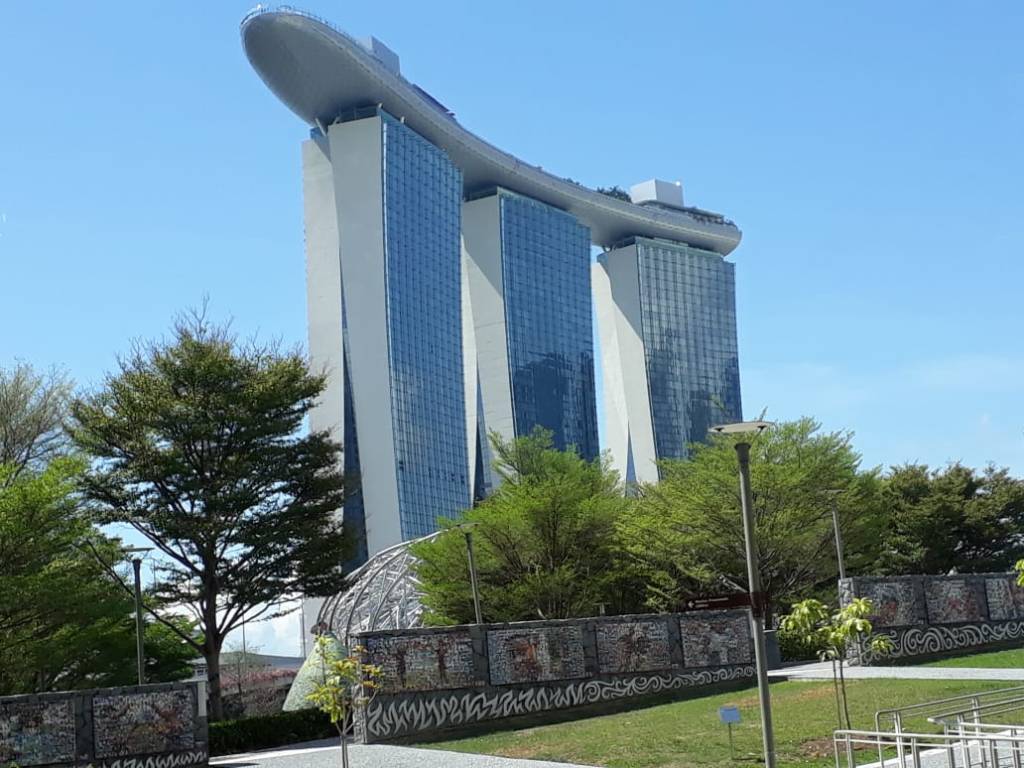
Singapore has a very clean pollution-free environment. Singapore’s environmental quality is better than many Asian countries and is comparable with cities of USA. National Environmental Agency (NEA) ,Singapore strictly monitors and maintain the environmental quality in Singapore. Singapore achieved sustainable growth and development while maintaining public health and clean environment.
The major air pollutants are sulfur dioxide, oxides of nitrogen, ozone, particulates, carbon monoxide etc. In Singapore industries like petroleum refinery, power plants and motor vehicles are major source of sulfur dioxide. The main oil refineries are Shell, Singapore Refining Co.,Exxonmobil etc. which contributes about 90% air pollution due to Sulfur dioxide. Power stations and motor vehicles contribute about 2.6% and 0.1% sulfur dioxide emissions respectively. The NEA’s Source Emission Test Scheme for industries requires industries to conduct source emission tests on their own. This allows industries to monitor their air emissions regularly, and to meet prescribed air emission standards.
All motor vehicles( petrol and diesel) uses nearly sulfur- free fuel ( less than 0.001% S content) . All the vehicles are having Euro VI emission standards. I have seen new cars are plying on the roads- no old cars were seen. So the emissions from motor vehicles is almost negligible.
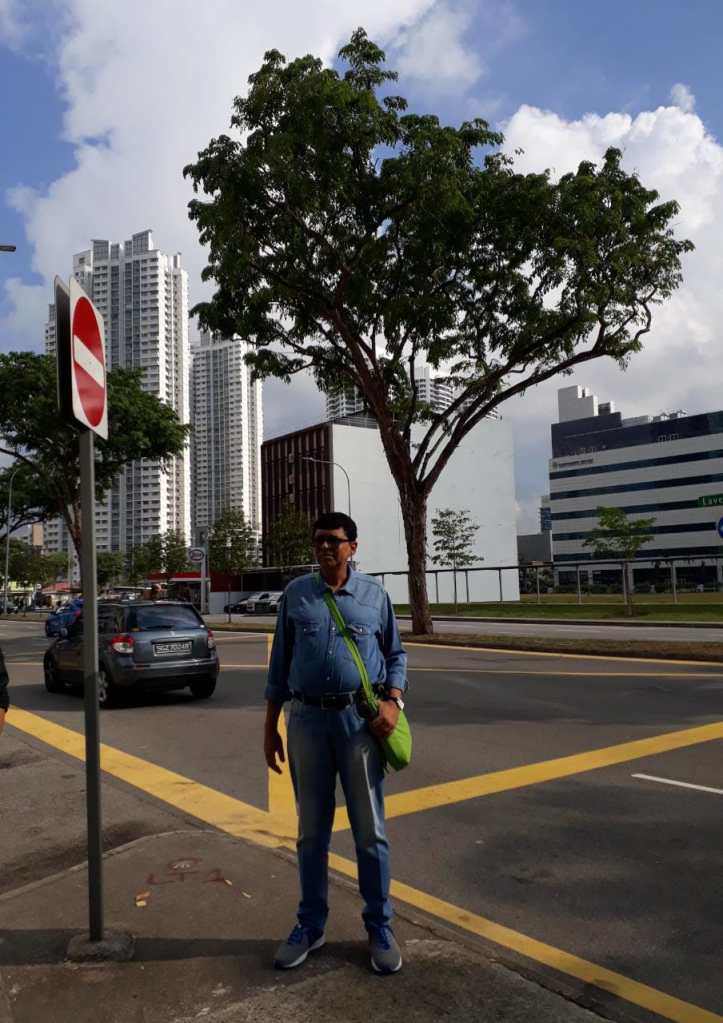
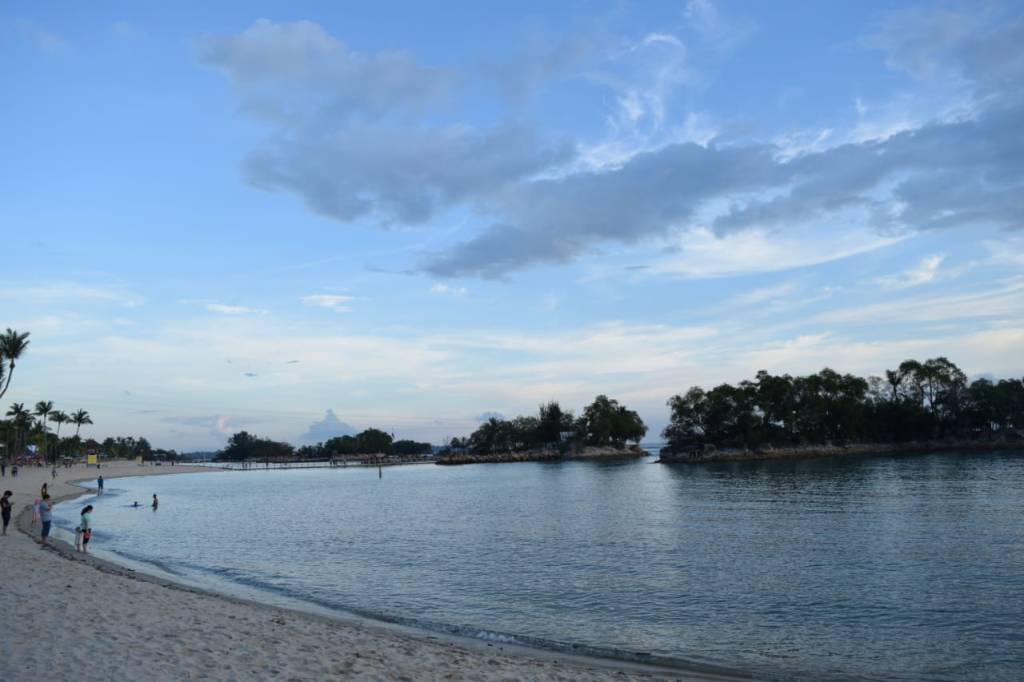
Singapore has also almost zero water pollution. Domestic waste water and industrial waste water are regularly monitored by NEA. The water quality of both inland water bodies and coastal areas is regularly monitored. For inland water bodies, the parameters monitored include pH, dissolved oxygen, biochemical oxygen demand, total suspended solids, ammonia and sulphide. Coastal water samples are analysed for metals, total organic carbon, and other physical, chemical and bacteriological parameters. The discharge of wastewater into open drains, canals and rivers is regulated by the Environmental Protection and Management Act (EPMA) and the Environmental Protection and Management (Trade Effluent) Regulations. No water pollution can be seen on any water bodies, rivers and marine environment of Singapore…
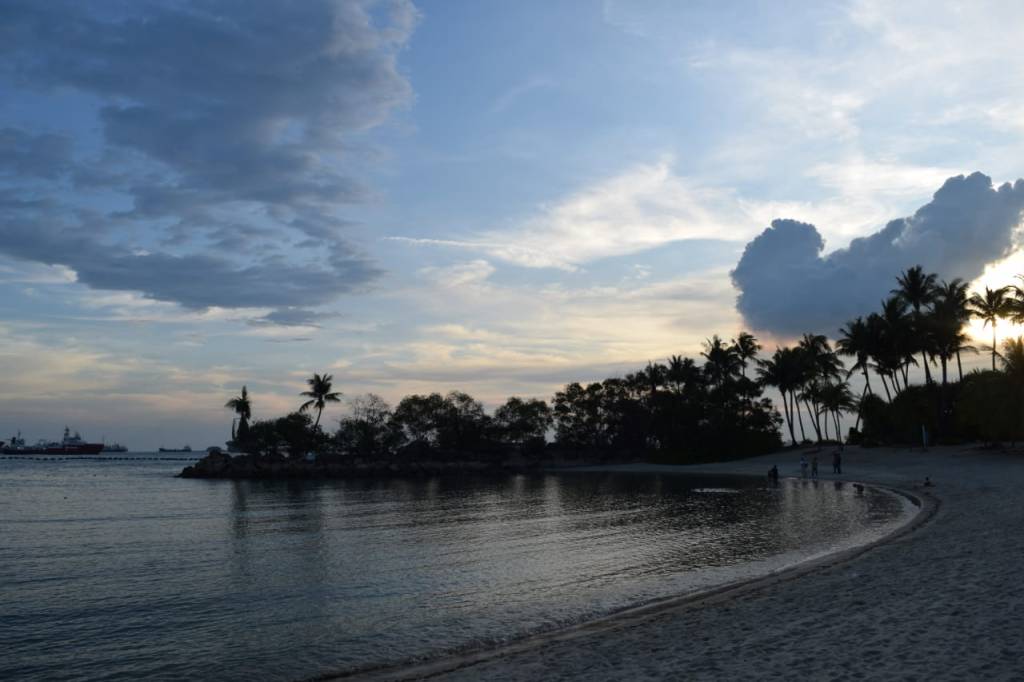
During the great Indonesia forest fire of 1997, the birds in the bird singing neighborhoods stopped singing and bird owners kept them at home. Indonesian forest fires in 1997 and the haze they produced disrupted the environment of Singapore .This also disrupted air travel and business. Such problem occurs in the dry season as a result of forest fires in the sprawling Indonesian archipelago, some of them deliberately started to clear land for cultivation
Singapore’s primary forest areas cover only about 200 hectare of the country’s land. In total, there are about only 0,25% of its total 720,5 kilometers square is dedicated for primary forest. Singaporean’s primary forests are characterized by its multiple layers with complex structural feature. It has one specific feature, which is the presence of main canopy of tall trees. Above the canopy we can easily spot some emergent dominated by giant trees.Below the canopy, we can find richer biodiversity of plants. Starting from a sub-canopy consisting of smaller trees, saplings of tall trees and shrubs. The lowest layer of the forest consists of seedlings and herbs covering the ground.
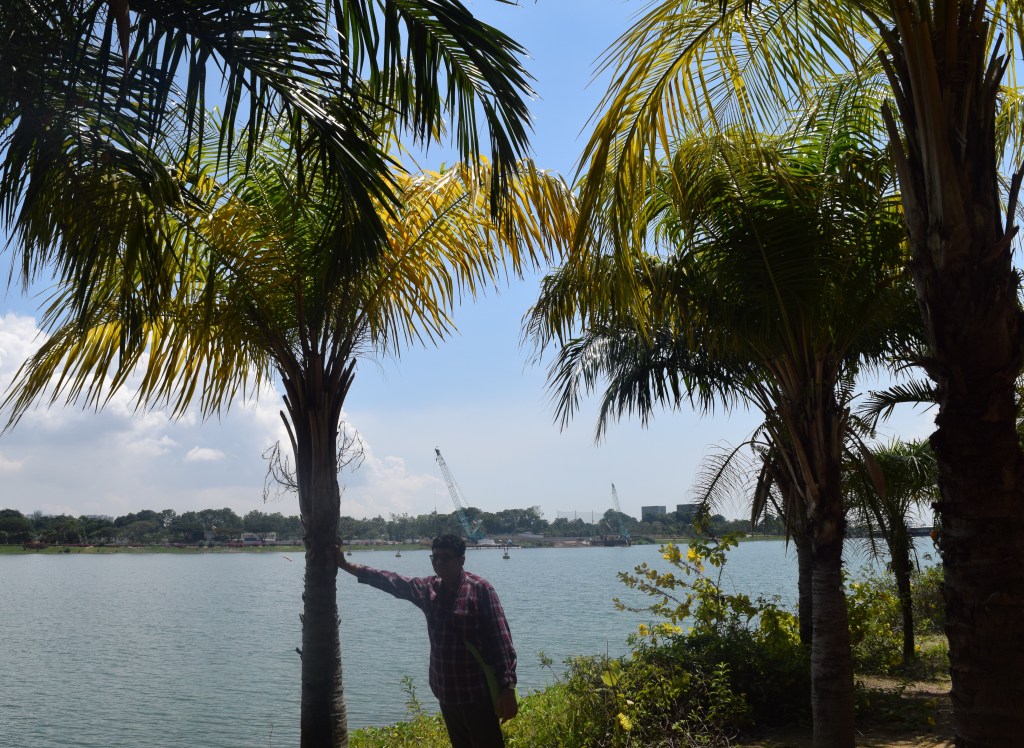
Not only rich in plant composition, Singapore’s primary forest is actually a rich ecosystem with unique biodiversity. A team of biodiversity surveyor spent their time in Singapore to study the forests’ biodiversity, in which they found interesting discoveries. Their discoveries include the re-discovery of white-spotted cat snake (Boiga drapiezii), bicolored leaf-nosed bat etc.. The species of snake, that can grow up to 2 meters long, has not been seen in the country for more than 100 years until their rediscovery.
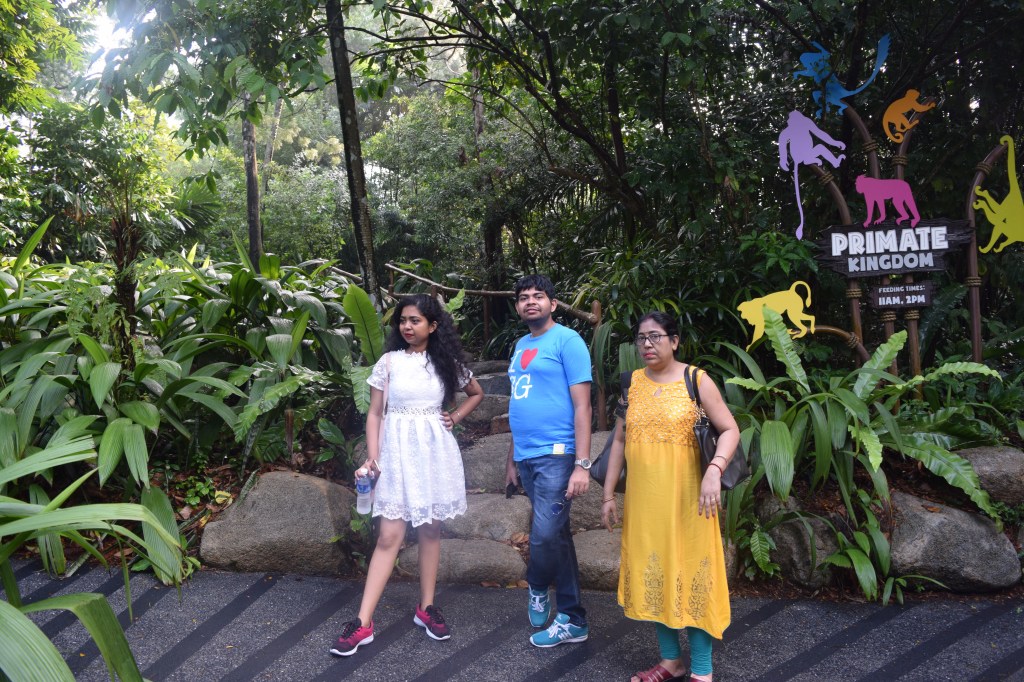
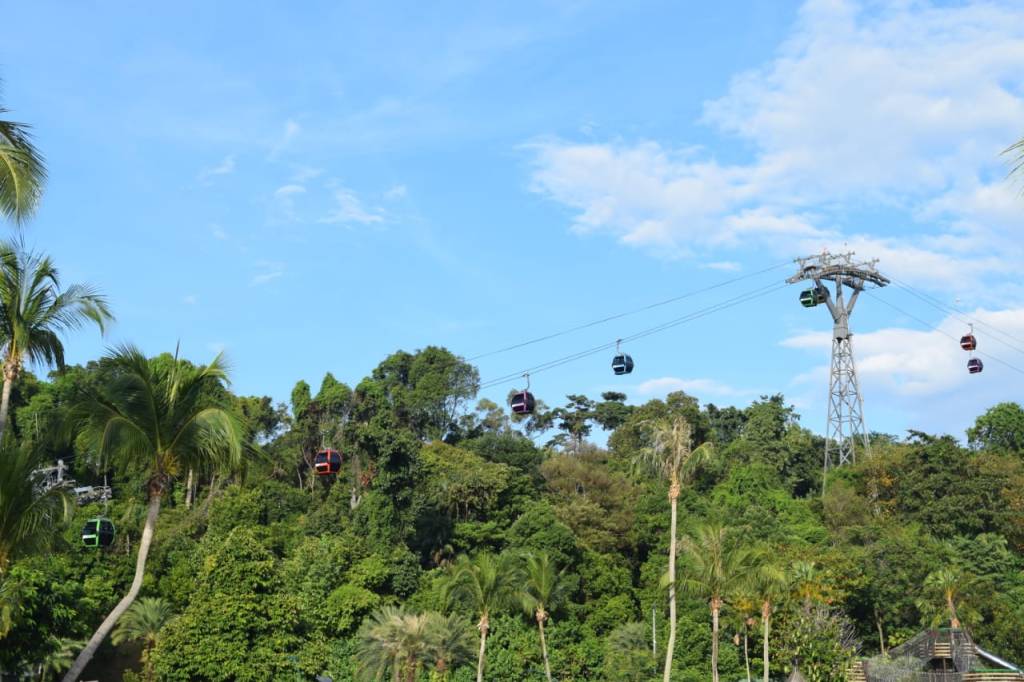
I was amazed to see the lush greenery and green environment of the country —- Gardens by the bay ( artificial forest) ,Singapore Zoo, Jurong Bird park., Botanical garden . How beautiful is the artificial forest and misty tropical mountain with variety of flowers, orchids and greenery in Garden by the bay!
We should take lessons from Singapore to preserve our environment.
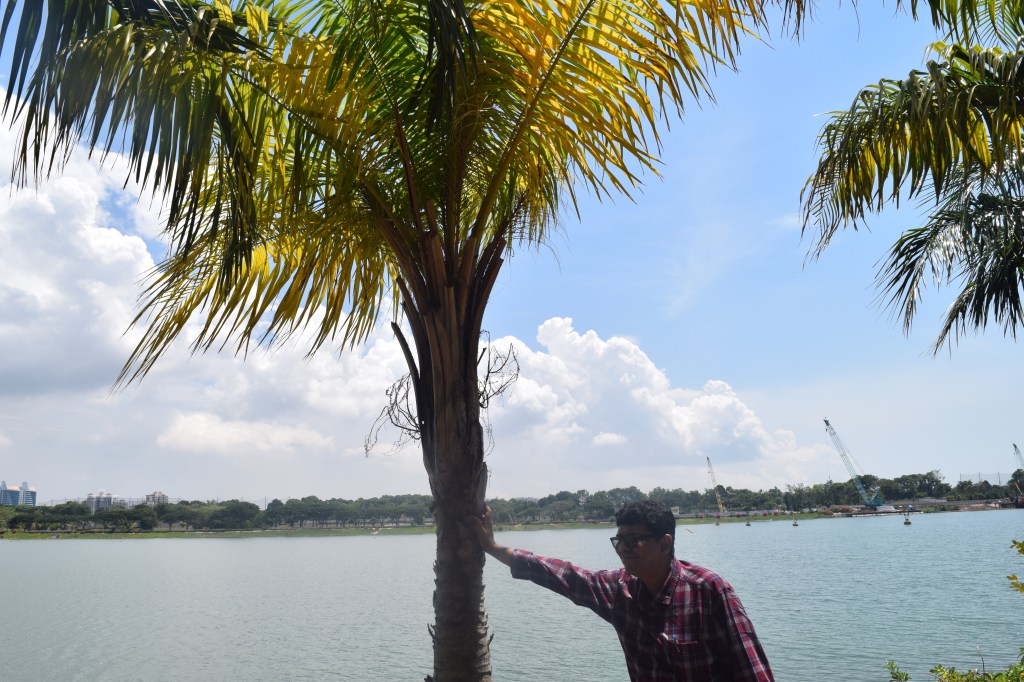
[Photographs by the author]
 Travels by Arnab De